Carrying the Weight: Managing Burnout and Trauma in Grassroots Journalism
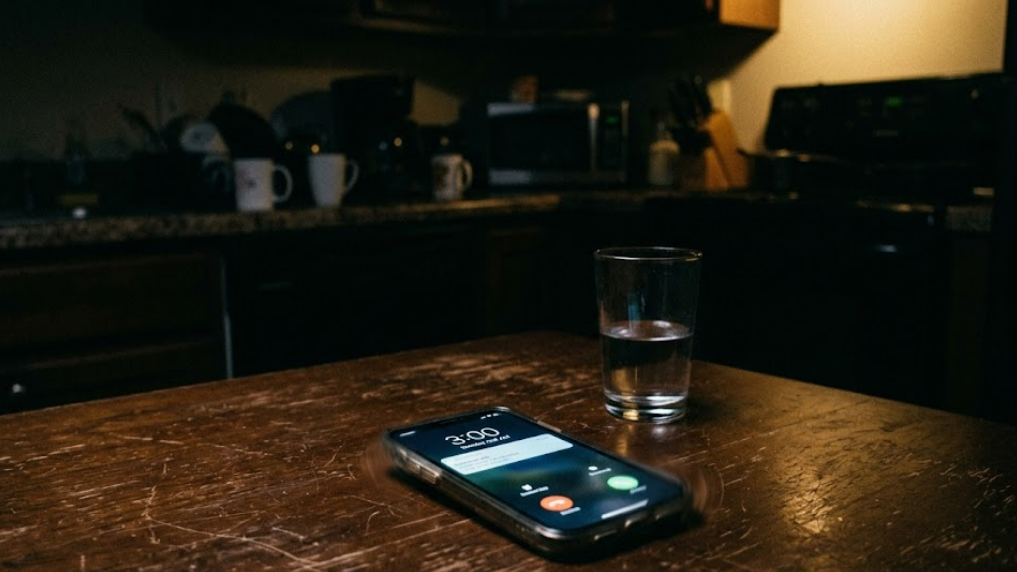
The phone buzzed and I wasn't holding it.
It was in the kitchen, charging, two rooms away. I felt it anyway—that little electric flutter against my thigh that means a source is texting, or an editor needs a quote moved up, or something is on fire somewhere and I'm the one close enough to drive to it. Phantom buzzing. Ask any reporter who's been at this more than five years. They'll know exactly what I mean and they'll get quiet when they say it.
Here's what we don't talk about: the job doesn't end when the story files. It just goes underground and keeps running.
I've covered three years of the same neighborhood losing the same fight. Evictions. A rec center that closed. A teenager whose name I still can't type without stopping for a second. I sat in living rooms and let people cry and I held the recorder steady because that was my job, and then I drove home and the recorder was still going in my head at 3 a.m., the monitor glowing, cursor blinking at me like it was waiting for me to be honest for once.
The Breaking Point Isn't What You Think
Everyone assumes burnout is a big dramatic collapse. A breakdown. A walking-out moment.
It isn't. For me it was a Tuesday.
I was transcribing an interview with a woman who'd lost her housing, and I caught myself thinking about the word count. Just—coldly, automatically—wondering if this would run long. That was the moment. Not the crying woman. Me, doing math over the top of her grief. I realized I had armored up so completely that I'd stopped being a person in the room and become a machine that turns suffering into copy.
That scared me more than any deadline ever has.
We don't get to clock out, that's the thing. The 24/7 cycle isn't a schedule, it's a weather system, and grassroots reporters live inside it without the storm shelter that the big outlets have. No EAP hotline. No therapist on retainer. A lot of us are stringing together freelance checks and covering our own communities, which means the trauma isn't "out there." It's our cousin's block. Our kid's school. Ourselves.
And if you're a BIPOC journalist? You're often the only one who showed up to the meeting that mattered, the only one the community trusts to get it right, the only one who notices what got left out of the official statement. That trust is sacred. It's also heavy as hell. You carry it home every single night.
What Actually Helped (And What Didn't)
Let me be honest. The wellness advice didn't help. Bubble baths do not metabolize secondary trauma. I tried.
What helped was smaller and harder.
Telling one other reporter the truth. Just one. A friend two cities over who I'd text at midnight, and she'd text back "yeah, me too," and somehow that was more medicine than anything a manager ever offered.
Learning that "no" is a complete sentence. I turned down a story last spring. Good story. Important. I said no because I didn't have it in me, and the earth kept spinning, and someone else covered it and they did fine.
Naming it out loud to younger reporters coming up. Because nobody named it for me, and I spent years thinking I was just weak. You are not weak. You are a soft animal doing a hard thing in a system that was never built to protect you.
So here's where I've landed, after all of it.
The work matters. God, it matters—the witnessing, the record, the refusal to let things disappear quietly. But you are not the story. You are the person carrying it, and a person needs to set things down sometimes or their arms give out.
Rest isn't a betrayal of the people you cover. A reporter who burns out helps no one. The most radical, sustainable thing you can do for your community is to still be standing in five years.
Put the phone in the other room. It can buzz without you.